
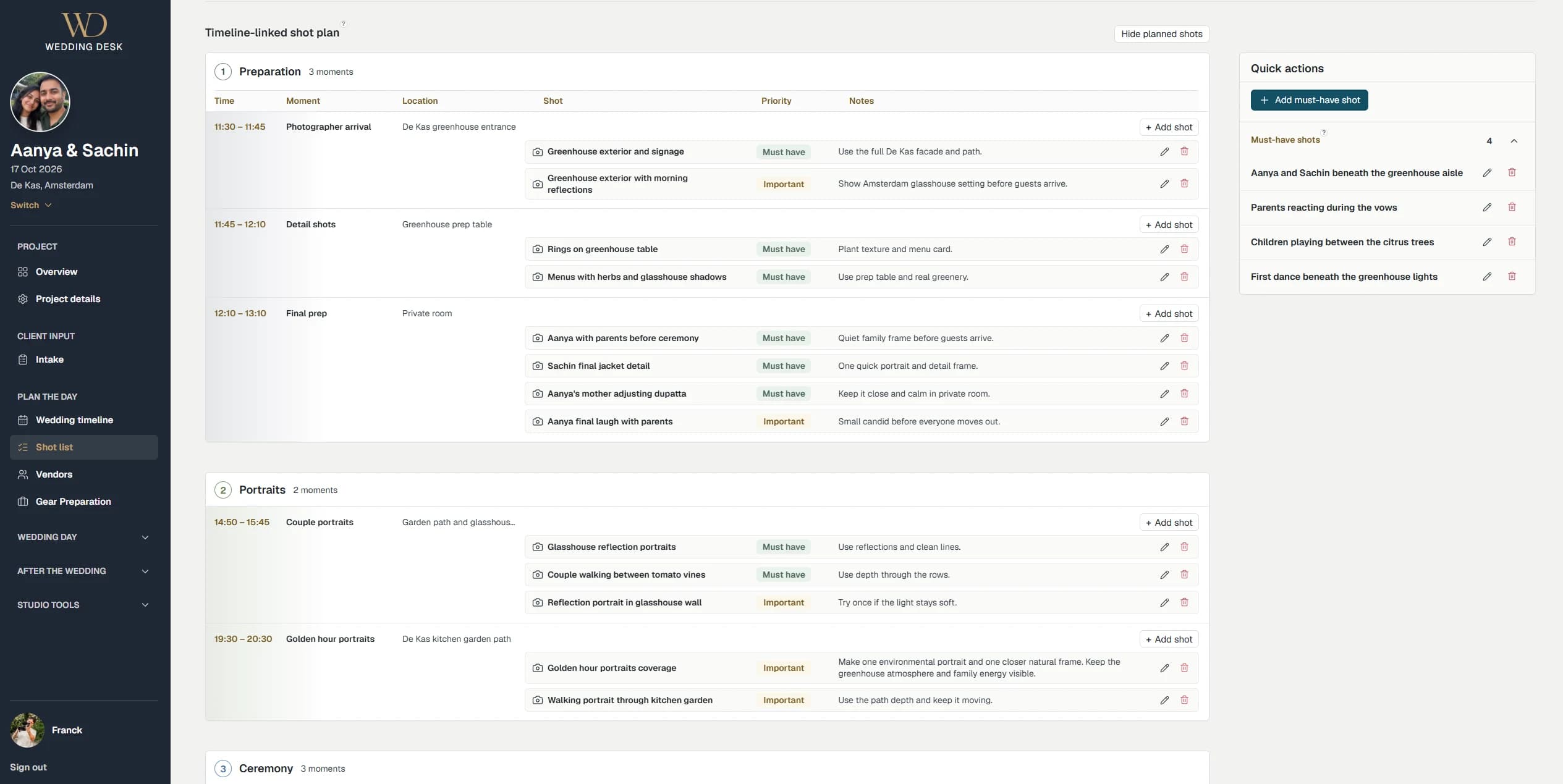
Start with the moments that can move
A wedding timeline looks clean when it is typed out, but the day itself rarely moves in straight lines. Someone is late from hair and makeup, the flowers arrive during portraits, or the ceremony space changes because the light is better somewhere else.
For photographers and videographers, the useful prep is not just knowing what should happen. It is knowing which moments can move, which moments cannot, and where a small delay will start to create pressure later in the day.
Keep the shot list connected to the timeline
A shot list is easier to trust when it sits close to the part of the day where it will actually be used. Family combinations belong near family portraits. Detail notes belong near prep. Ceremony coverage belongs where the ceremony pressure is highest.
That keeps the list from becoming a separate document you have to remember to check. It becomes part of the working plan instead.
Write notes for the tired version of yourself
The best notes are not clever. They are obvious at a glance. If a note needs to help you at 7:30 in the evening, after a long ceremony and a tight portrait block, it should be short, direct and placed exactly where you need it.
Leave room for judgment
Good planning should not make the day rigid. It should remove the low-value decisions so there is more attention left for the moments that actually need judgment.
That is the point of preparing the workflow: less scrambling, fewer forgotten details and more calm when the day starts moving faster than the schedule.